

Stocks vs Other Investments
Different ways Indians invest
Many Indian families traditionally use FDs, gold, and property. Stocks and mutual funds are newer for many people, but they offer unique advantages for long-term wealth building.
Bank FDs and Savings Accounts
- Very safe and guaranteed returns.
- Low returns, often barely above inflation.
- Ideal for emergency funds and short-term goals, but not for long-term wealth.
Gold
- Seen as a safety asset and cultural store of value.
- Helps during crises and currency depreciation.
- But doesn't generate cash flows like a business, so wealth creation is limited.
Real Estate
- Tangible, familiar, can be emotionally satisfying.
- Needs big capital, maintenance, and property tax.
- Hard to sell quickly (low liquidity).
- Prices can also fall over long stretches.
Bonds
- You lend money to government or companies.
- More stable than stocks; returns usually lower.
- Good for stability and capital protection.
Stocks and Equity Mutual Funds
- Represent ownership in businesses.
- Higher volatility in the short term.
- Historically provide the highest long-term returns among major asset classes.
Summary: There is no "perfect" asset. A balanced portfolio uses a mix, but stocks are key for long-term growth.
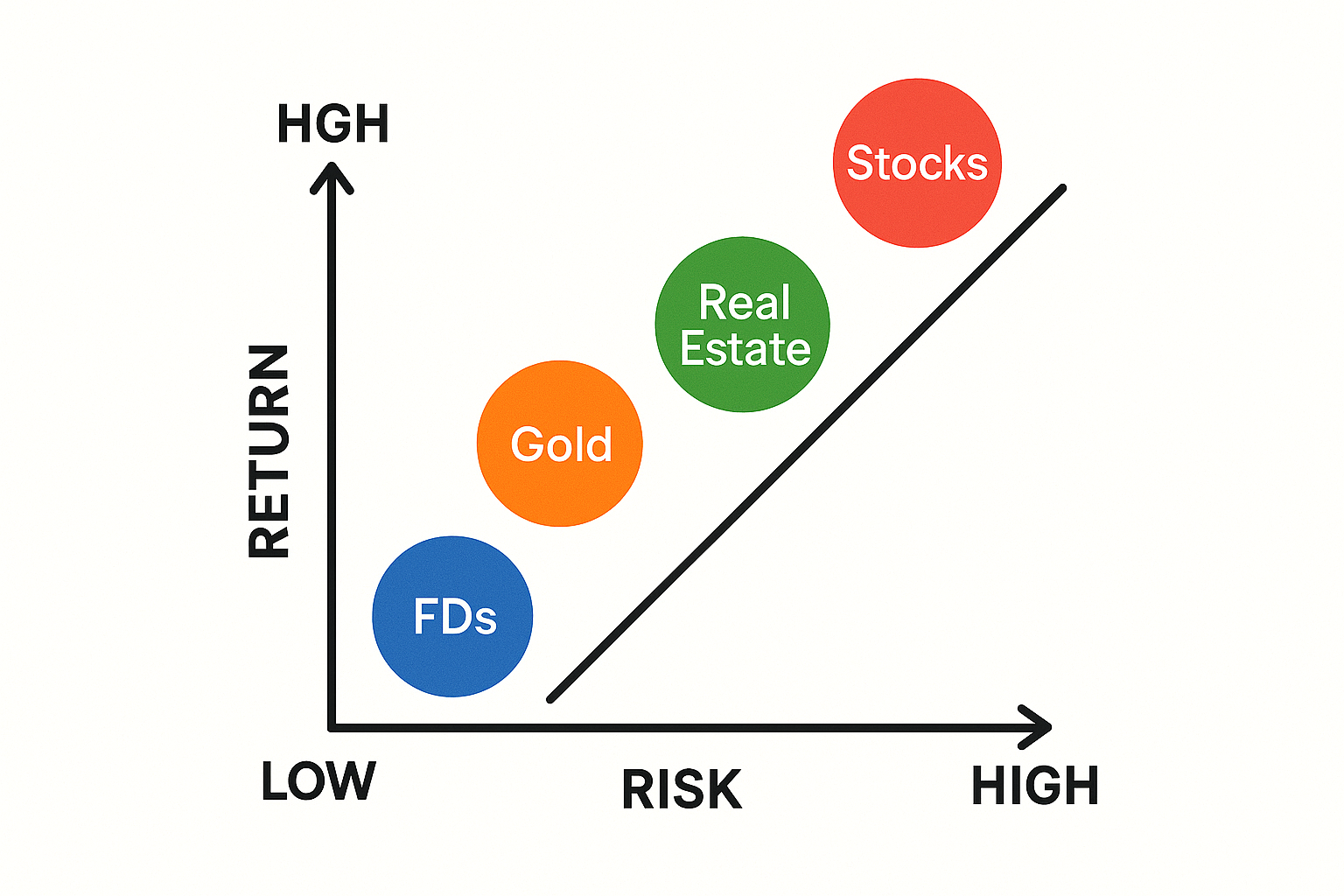
Blanket's risk-vs-return quadrant (shown above) is the same visual you can open inside the app to compare asset classes when deciding how to diversify.