

Understanding Risk in Investing
Risk is not always bad
Risk = possibility of fluctuation or loss. But without risk, higher returns are impossible. The key is understanding and managing risk, not avoiding it completely.
Key risks for Indian investors
- Market risk – Overall market falls due to economic conditions, global events, or sentiment.
- Company-specific risk – Fraud, bad management, disruption, or business failure.
- Sector risk – Regulatory changes, technology changes, or industry downturns.
- Liquidity risk – Hard to sell at fair price, especially in small-cap stocks or real estate.
- Inflation risk – Money losing buying power if returns are too low (e.g., keeping everything in FDs).
How to manage risk
- Diversify – Across sectors, asset classes, and companies. Don't put all money into 1–2 stocks or 1 property.
- Use SIPs and long time horizons – Time reduces risk. Short-term investing is high risk; long-term investing in quality assets reduces the chance of loss.
- Avoid leverage and speculative trading – Don't borrow to invest or chase quick profits.
- Invest in quality – Well-managed companies with strong fundamentals are less risky over time.
Risk vs time
Short-term investing (1–2 years) is high risk because markets are volatile. But long-term investing (7–10+ years) in diversified equity portfolios has historically shown much lower risk of loss. Time is your friend when managing risk.
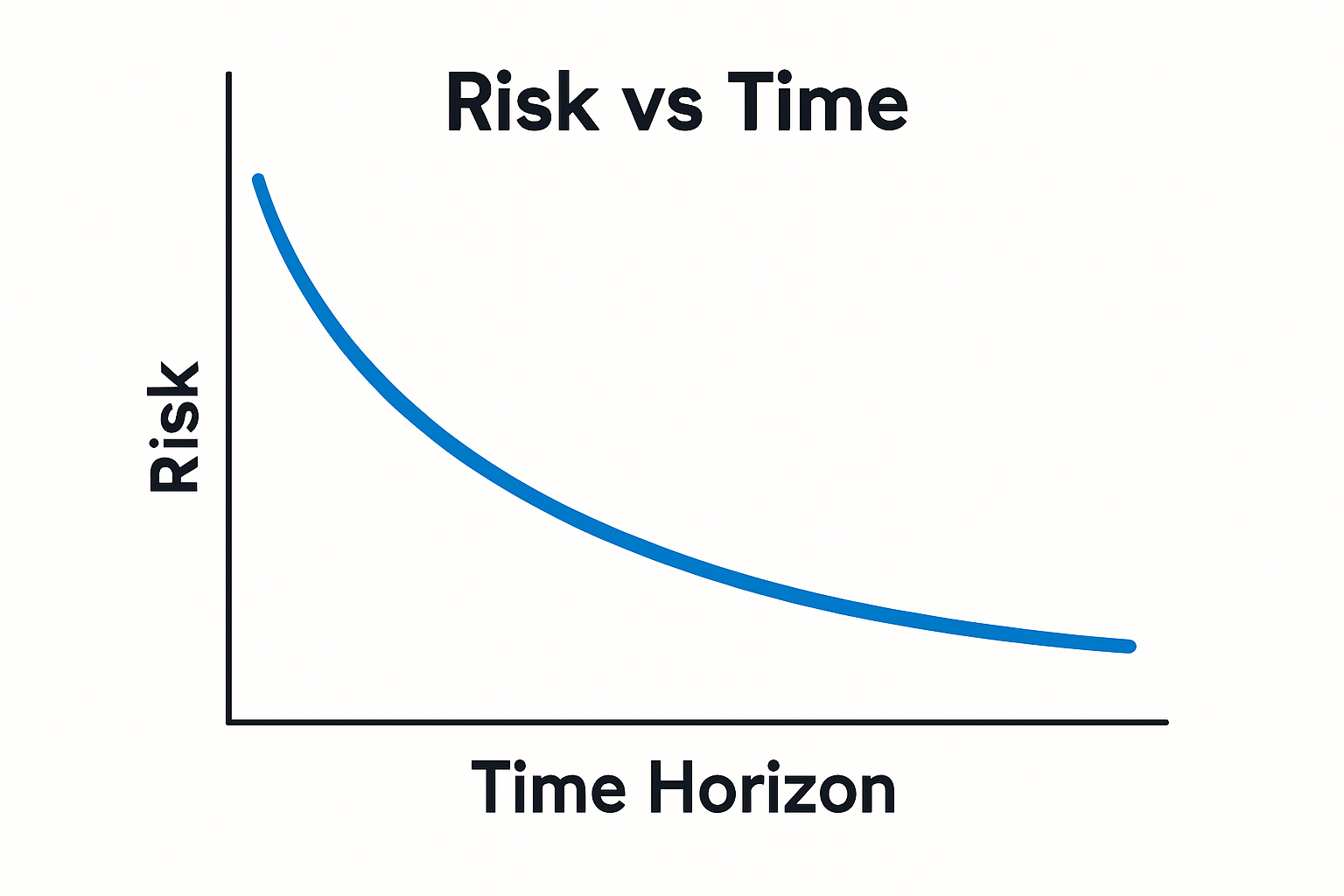
Blanket's risk-vs-time visual (above) is available on the Learn page, so readers can revisit the exact slope that demonstrates why long-term horizons reduce volatility.