

Introduction to Valuation Ratios
What is valuation?
Valuation is about understanding whether a stock price is cheap, fair, or expensive relative to its business performance. It helps you avoid overpaying for stocks.
Key ratios every beginner should know
- P/E (Price to Earnings) – How many rupees you pay for ₹1 of earnings. Lower is usually better, but high-growth companies trade at higher P/E.
- P/B (Price to Book) – Price vs net worth per share. Important for banks and financials. Below 1 can mean undervalued.
- Market Cap – Total market value of the company (price × shares). Large cap = stable, small cap = more volatile.
- Dividend Yield – Annual dividend divided by share price. Higher yield = more income, but very high yield can signal problems.
- Price to Sales (P/S) – Useful when profits are unstable or negative. Lower is better.
- Price to Cash Flow – Focuses on cash instead of accounting profit. More reliable than P/E for some companies.
How to use ratios correctly
- Always compare within the same sector/industry – A P/E of 30 might be high for a bank but normal for a tech company.
- High growth companies naturally trade at higher P/E – They're expected to grow earnings fast, so investors pay more.
- Very low valuation can sometimes signal hidden problems – If a stock is "too cheap," there might be a reason.
- Use ratios along with business quality and growth – Don't buy just because P/E is low. Check if the business is actually good.
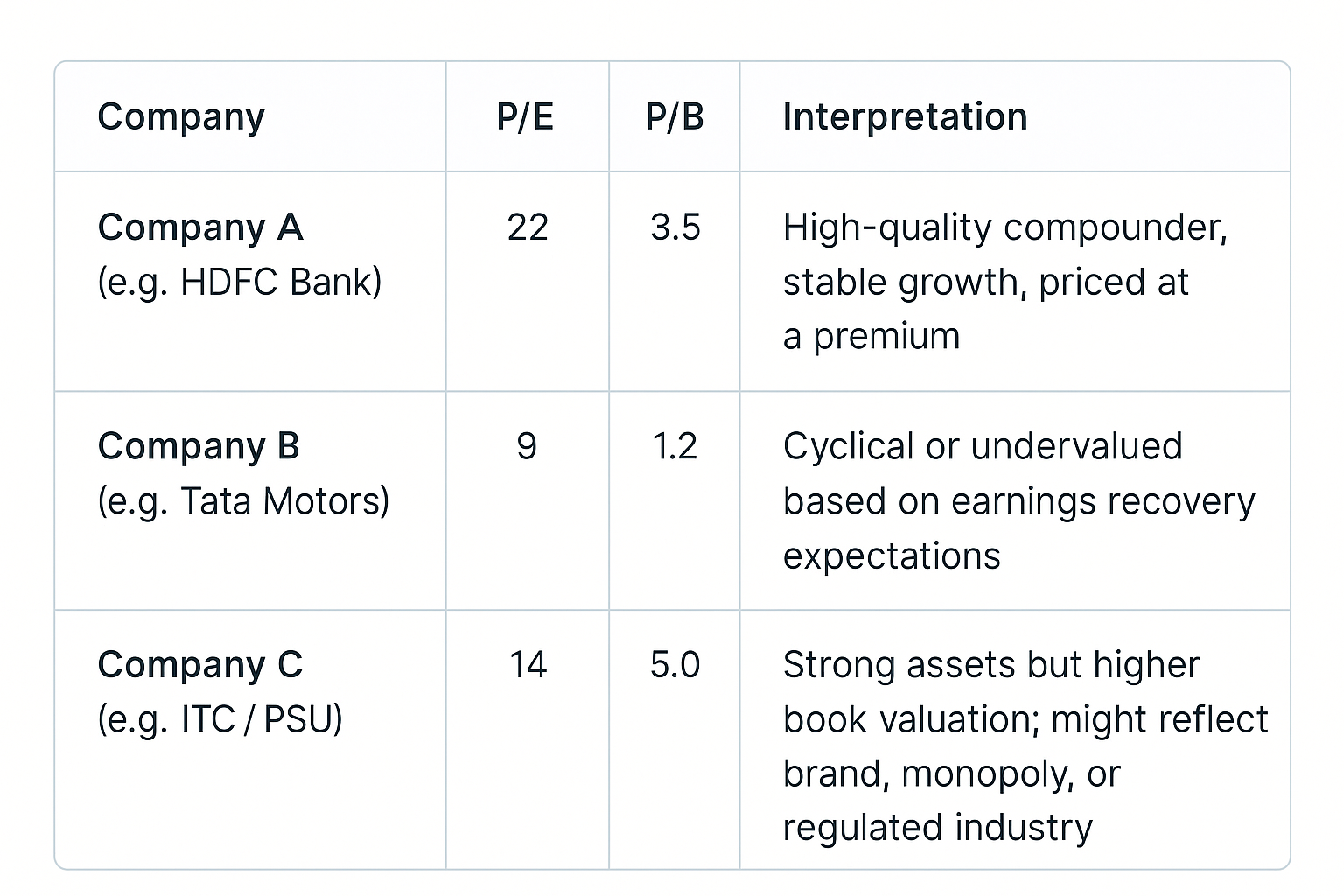
The comparison grid above is pulled from Blanket's valuation ratios table, so the narrative about P/E, P/B, and dividend yield corresponds to real labels on the platform.