

How to Read Basic Financial Statements
Why financial statements matter
Financial statements are the language of business. They show if a company is healthy or fragile, growing or shrinking, profitable or losing money. Learning to read them helps you make better investment decisions.
Income Statement – Is the company making money?
The income statement shows revenue, expenses, and profit over a period (quarterly or annually).
Key terms:
- Revenue – Total sales
- Operating Profit – Profit from core business operations
- Net Profit – Final profit after all expenses and taxes
- EPS (Earnings Per Share) – Net profit divided by number of shares
Investors use it to see growth and profitability trends. Is revenue growing? Are margins improving?
Balance Sheet – What the company owns and owes
The balance sheet shows assets (what it owns), liabilities (what it owes), and equity (net worth) at a point in time.
Key things to check:
- High debt vs low debt – Too much debt can be risky, especially if cash flows are weak.
- Cash reserves – Strong cash position provides safety and flexibility.
- Asset quality – Are assets real and valuable, or inflated?
Cash Flow Statement – Where the money actually flows
Shows actual cash movements, not just accounting profits.
Three sections:
- Cash from operations – Core business cash generation
- Cash from investing – Capex, acquisitions, asset sales
- Cash from financing – Loans, equity raising, dividends paid
Free cash flow (cash from operations minus capex) is what's left for shareholders. Positive and growing free cash flow is a great sign.
Note: Blanket pages surface key numbers in a simplified way so beginners don't have to read raw PDFs.
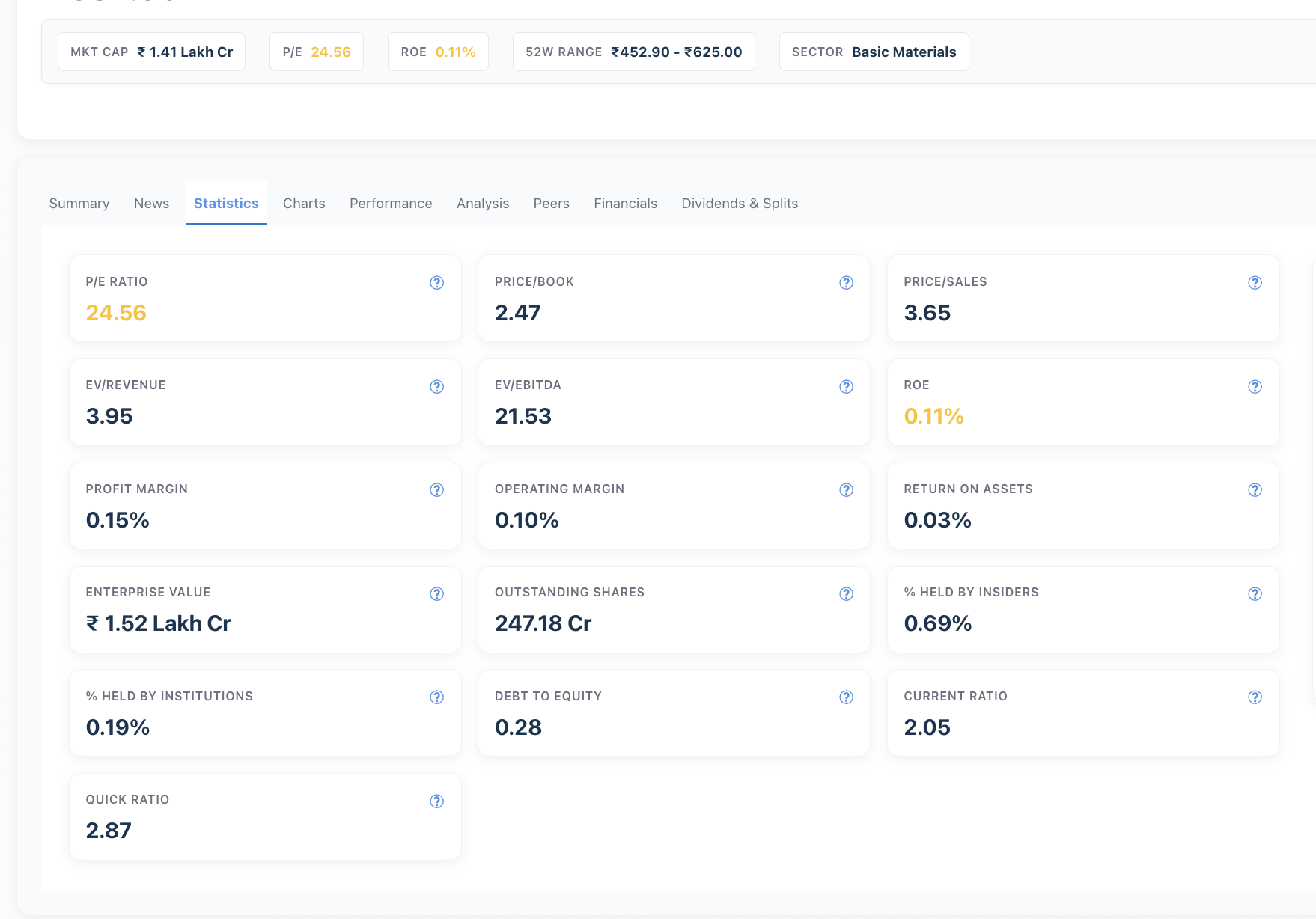
This capture from Blanket's Company Statistics panel is the real interface beginners will read, so every metric called out in the text lines up with what they will click next.